Topic
Design Systems
What real design system ownership looks like, from building one from scratch to keeping it coherent at scale, told from having done it.
A design system is easy to describe in the abstract, a shared library of components, tokens, and patterns, and hard to actually own well. The gap between the two is most of what this cluster is about.
These posts are grouped by where you actually are in a design system's life, not by an idealized org chart of what a "mature" system should look like. Most teams don't get to design a system from a blank slate with unlimited buy-in. They inherit one, half-build one under deadline pressure, or realize partway through a product's growth that inconsistency has quietly become a real cost.
What I Learned Building a Design System From Scratch covers the earliest and highest-leverage phase: the decisions that are cheap to make early and expensive to unwind later, made under the actual constraints of a real project rather than a green-field exercise.
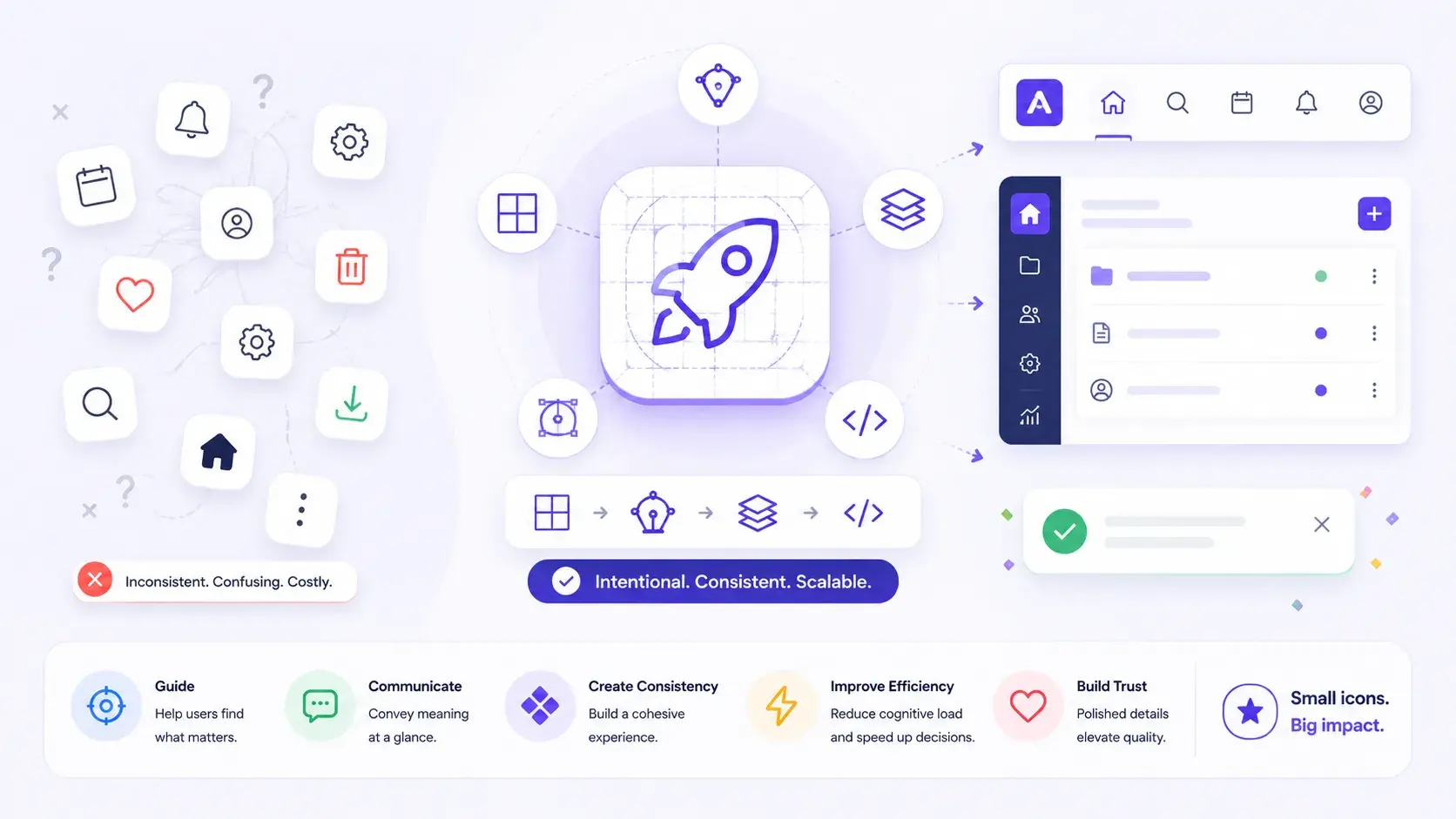
Icons Are the Most Underestimated Part of Your Design System is deliberately narrow. Icon systems get treated as decoration until they're not: inconsistent icon logic is one of the fastest ways a "consistent" design system stops feeling consistent to the people using it every day, and it's an easy piece to get right early.
Design Systems: What Real Design System Experience Actually Looks Like is the honest version of the other two: what ownership looks like once a system is live, being used by other people, and has to survive contact with a real product roadmap instead of a design system pitch deck.
Two topics that belong in this cluster and don't have their own article yet: governance (who can propose, approve, and deprecate a component, and how that decision-making actually scales past one designer) and accessibility (how a design system either bakes accessibility in as a default or leaves every team to rediscover the same WCAG issues independently). Both are real, both come up constantly in practice, and both deserve their own write-up rather than a rushed paragraph here. They'll be added to this cluster once written.
Case studies applying this thinking to a live product will be added here as they're ready to publish.
In This Cluster