Modern Product Design Is a System, Not Just Screens
Product design in 2026 isn't one skill, it's five disciplines working as a system: AI and agentic UX, research, interaction design, design systems, and growth.
"Modern product design" gets reduced to one skill more often than any other part of the job: making interfaces look good. A clean layout, tidy type, a well-chosen palette. That's craft, and craft still matters. It's one output of a much larger discipline, not the discipline itself.
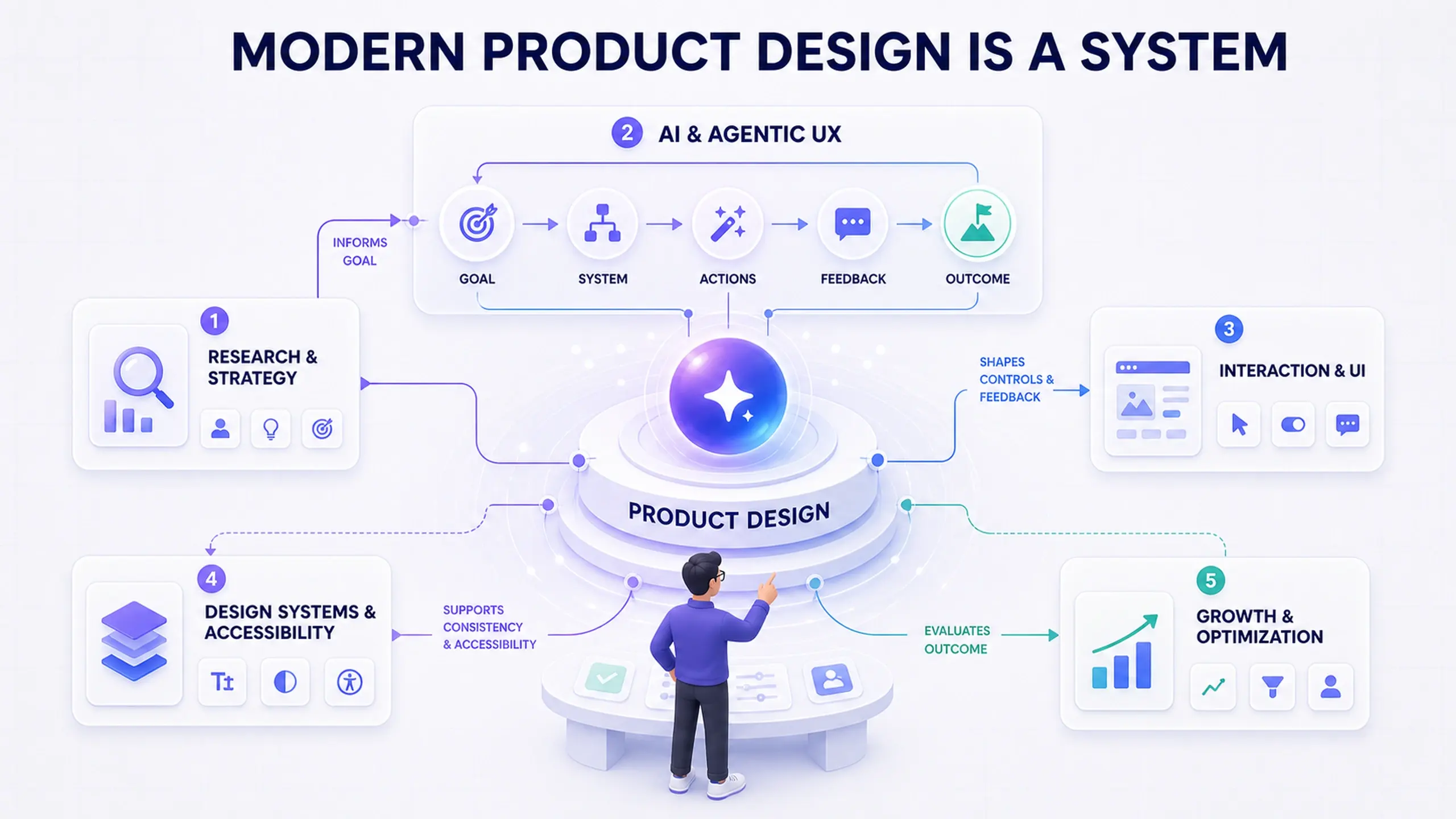
What modern product design actually covers, as of 2026, is five interconnected areas: AI and agentic UX, research and strategy, interaction and UI design, design systems and accessibility, and growth and optimization. None of them work in isolation anymore, and the biggest change in the last few years isn't any one of them individually. It's that AI has started acting inside products on a user's behalf, not just displaying information for a user to act on, and that changes how the other four have to behave around it.
This isn't an argument that every designer needs to master all five. Most people specialize in one or two, and that's the right instinct at the individual level. It's an argument that understanding how the five connect is what lets you tell, when something in a product isn't working, which discipline actually owns the fix.
What actually changed in "modern" product design
For most of the last decade, product design ran through research, interaction design, visual design, and a handoff to engineering, largely in that order. AI didn't remove any of those steps. It added a layer none of the older frameworks accounted for: a system that can take goal-directed action on a user's behalf, instead of only presenting information for a user to act on themselves.
That's the real boundary worth drawing, and it's a design boundary, not just a technical one:
- A traditional interface is something a user operates
- An agentic feature is something that operates, with a user's goal as the input and an outcome as the output
Most products right now are a mix: some flows are still plain forms, others have quietly become semi-autonomous. Knowing which is which changes what each of the five disciplines below is actually responsible for.
Five disciplines, one connected system
| Discipline | The question it answers | What breaks when it's skipped |
|---|---|---|
| AI & agentic UX | What should the system do on its own, and where does a human need to stay in the loop? | Users either can't trust the AI or can't tell what it's doing |
| Research & strategy | Are we solving a real problem, for a real person, in a way we can verify? | Effort goes into a beautifully built wrong answer |
| Interaction & UI design | How does a decision become something a person can actually use? | The right idea ships with a confusing or inaccessible execution |
| Design systems & accessibility | Does this hold together, and work, at scale and for everyone? | Inconsistency and exclusion compound faster than anyone notices |
| Growth & optimization | Is the product actually improving after launch, based on evidence? | Teams keep shipping opinions instead of testing them |
The rest of this article isn't a full deep dive into each of these; I've written longer, example-driven pieces on several of them already, and I'll point to those along the way. What's here is the map: what each discipline is actually for, and why the connections between them matter more now than they used to.
AI and agentic UX: designing systems that act, not just display
This is the newest discipline on the list, and the one most teams have the least established practice around. It covers how a product's AI features behave: what they generate, what they're allowed to do without asking first, how they explain themselves when they're uncertain, and how a user can tell what's happening and step in.
A few concepts sit inside this discipline specifically:
- Conversational and retrieval-based interfaces: how a product answers a question and shows where the answer came from
- Agentic workflows: systems that plan and execute multiple steps toward a goal
- Human-in-the-loop controls: what decides how much of that a person has to review before it takes effect
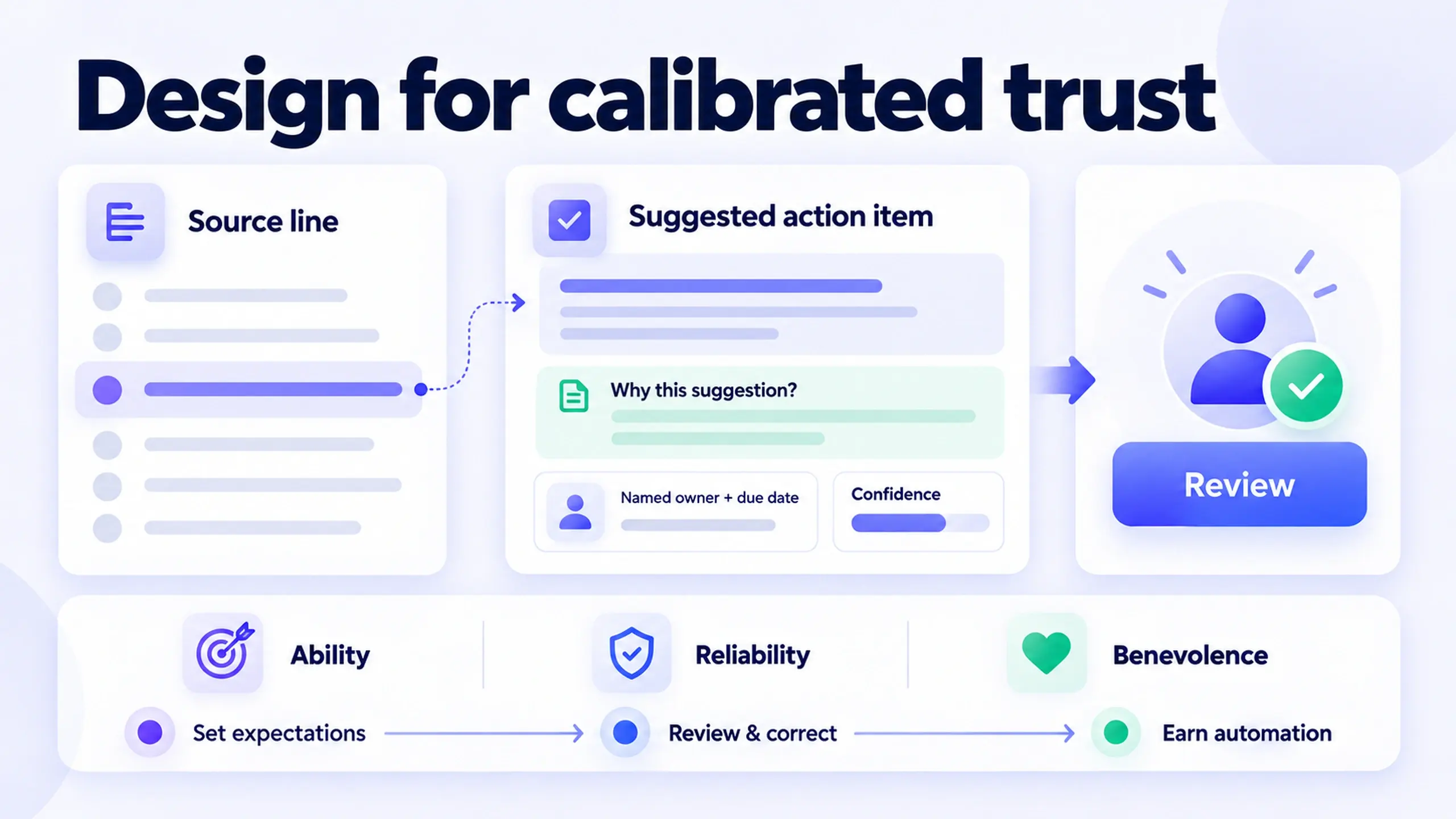
Microsoft's own guidelines for human-AI interaction frame a version of this well: make the system's capabilities and uncertainty visible from the first interaction, rather than bolting on an explanation after something goes wrong.
Not every product needs this layer, and adding persona, autonomy, or agentic behavior to a feature that's really just a form with extra steps tends to make it feel less trustworthy, not more capable. I've written more about where that line actually sits in what Agent UX is and when a product genuinely needs it, and about how AI changes the day-to-day design process itself in where AI actually fits in product design work.
Research and strategy: knowing which problem is real
Research and strategy answer the question every other discipline assumes has already been answered: is this the right problem, for the right person, and how will we know if we solved it?
- User interviews, usability testing, and journey mapping surface what's actually happening
- Behavioral analytics and product metrics tell you whether a decision made things better or just made them different
This discipline hasn't changed in kind because of AI, but it has changed in urgency. A feature whose output is less predictable, because a model is generating it, needs more usability testing, not less, since you can no longer assume the interface behaves the same way twice. I go into the specific methods and where each one earns its place in user research methods that actually change product decisions, and in the strategic layer that sits above research itself in product thinking applied.
Interaction and UI design: turning a decision into something usable
This is the discipline most people picture when they hear "product design," and it's still exactly as necessary as it's always been.
- Information architecture and user flows decide how someone moves through a product
- Wireframes and prototypes let you test a direction before committing to it
- Visual hierarchy, motion, and microinteractions are what make the final result clear instead of merely functional
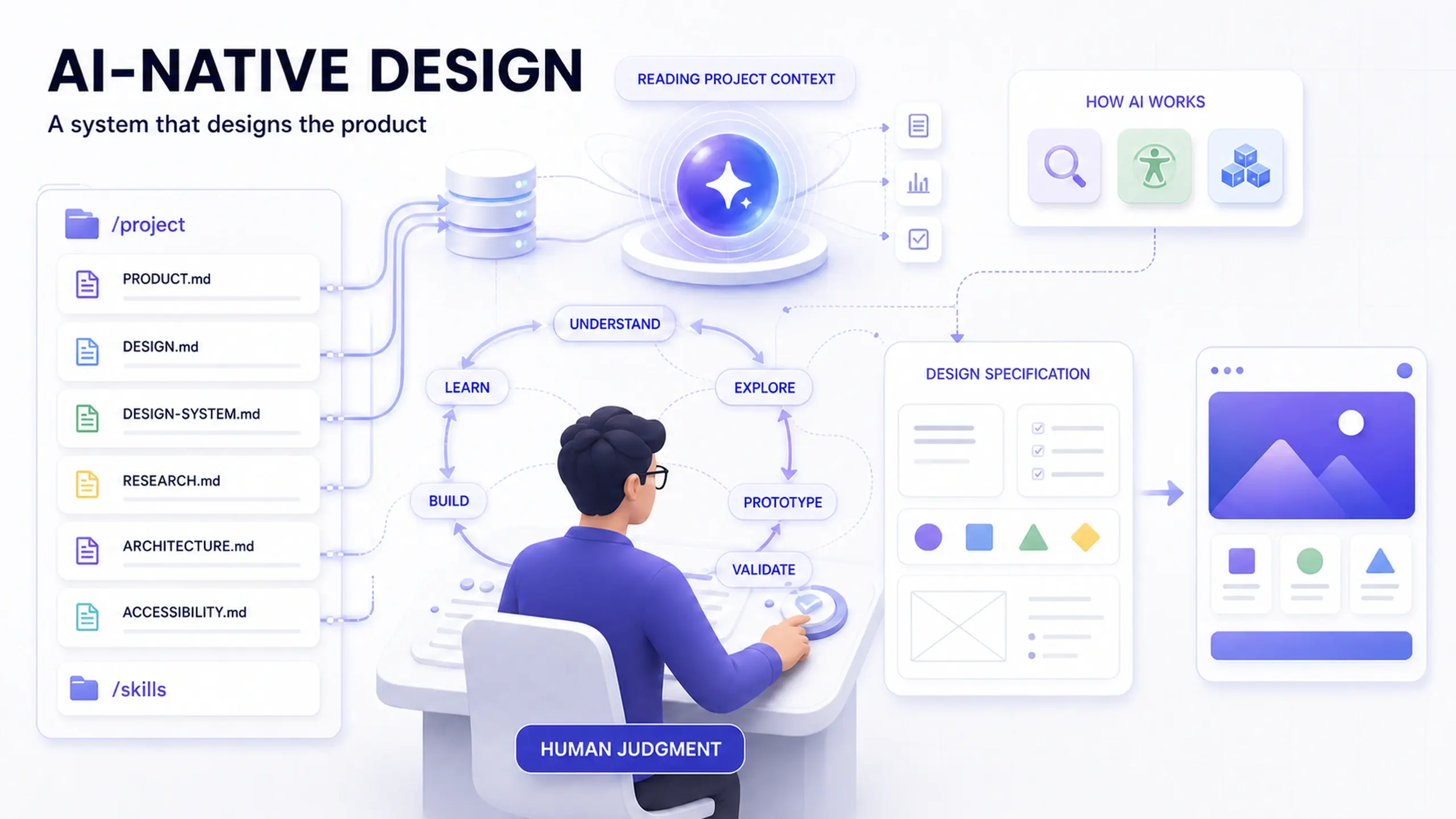
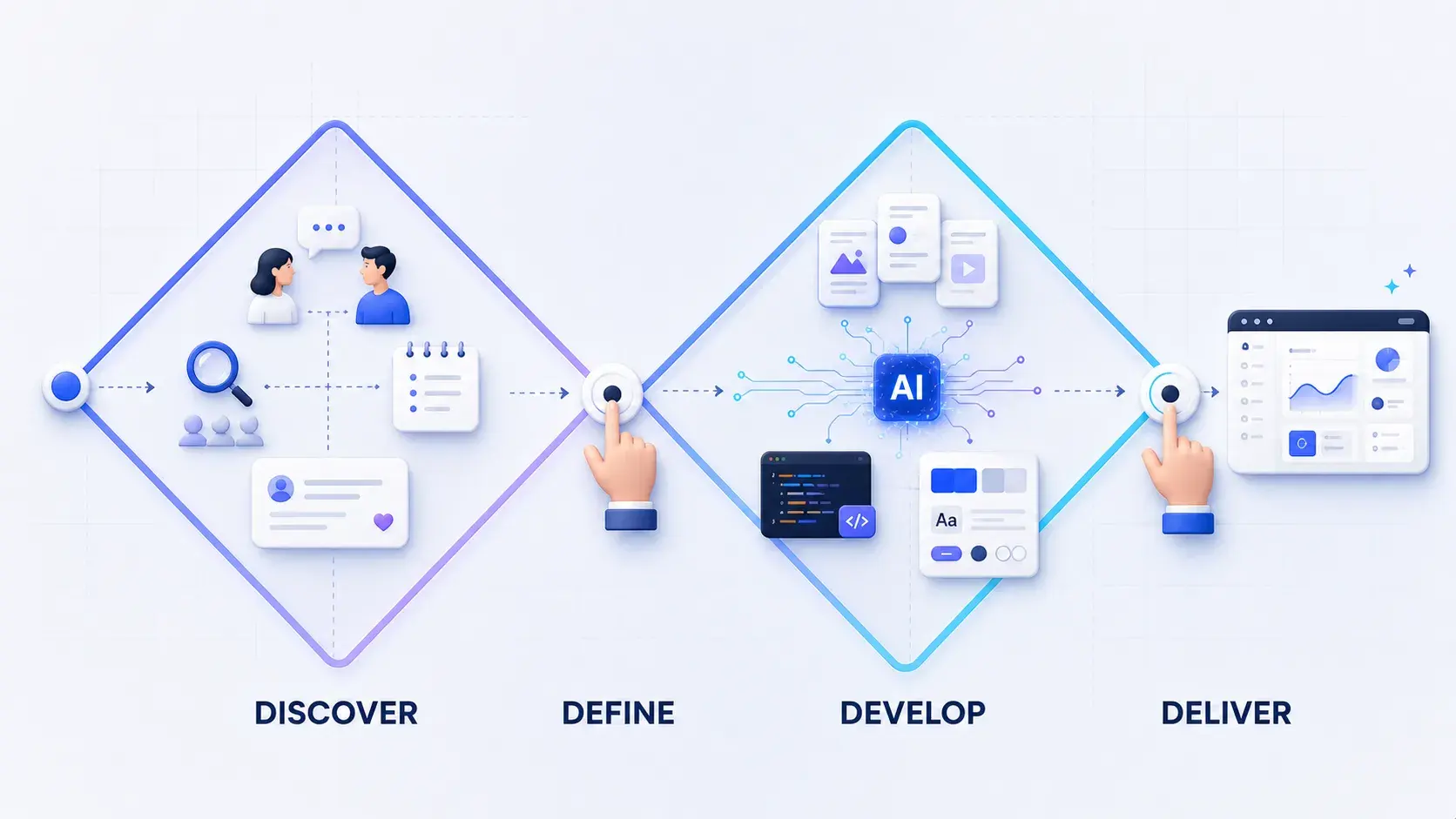
What's changed is less the craft itself and more the pace it can move at. AI-assisted prototyping means a direction can go from idea to something clickable in hours instead of sprints, which is a genuine speed gain and also a genuine risk: speed without a real user in the loop is just a faster way to guess. I've written about the actual process shift in where AI fits, phase by phase, in the design process, and the habits (flows, prioritization, trade-offs, critique) that hold up regardless of how fast the tooling gets in design process applied.
Design systems and accessibility: making consistency and inclusion the default
- Components and tokens let a product stay consistent as it grows past the size one person can hold in their head
- Responsive design accounts for the range of devices and contexts a product actually gets used in
- Accessibility belongs in this same discipline, not bolted on afterward, because most accessibility failures are really design-system failures: a component shipped once without keyboard support gets copied fifty times before anyone notices
The Web Content Accessibility Guidelines (WCAG) 2.2 are the standard worth building against directly rather than treating as a checklist to run at the end. I've written about what actually separates surface-level design-system knowledge from real experience in design systems applied, and about the specific mistakes worth avoiding on a first build in design systems at scale.
Growth and optimization: what happens after launch
Product design doesn't stop at launch, and this is the discipline most likely to get treated as someone else's job.
- Onboarding and activation decide whether a new user gets to the moment the product actually proves its value
- Personalization and predictive UX adjust the experience based on what's already known about a user
- A/B testing and experimentation are how a team tells the difference between an opinion and a result
- Retention work is what keeps a product's core loop actually working over time
None of this is separate from design. It's design decisions, evaluated with evidence instead of confidence.
A handful of the fixes that move these numbers are smaller than people expect, and I've catalogued nine of them, none requiring a redesign, in simple UX fixes that boost conversion.
The interaction model just got two steps longer
Here's the part of this that's genuinely new, and it's the reason the five disciplines above can't be treated as five separate lanes anymore. For most of digital product design's history, the underlying model of how a product works was short:
User → Interface → Action
A person looked at a screen, understood what it offered, and took an action. Every discipline above optimized some part of that short chain: research made sure the interface offered the right thing, interaction design made the action easy to find and complete, design systems kept it consistent, growth work tuned the funnel around it.
With AI agents acting inside products, that chain has two new links in it:
User → Goal → Intelligent System → Actions → Feedback → Outcome
- The user now states a goal rather than operating an interface directly
- A system interprets that goal and takes one or more actions toward it
- Feedback (from the user, from the environment, from the result itself) shapes what happens next
- The outcome, not the interface, is what the design is actually being judged against
| Model | |
|---|---|
| Old | User → Interface → Action |
| New | User → Goal → Intelligent System → Actions → Feedback → Outcome |
That's a longer, less linear chain, and every discipline above has something new to answer because of it:
- Research now has to validate goals and outcomes, not just screens and flows
- Interaction design has to account for a system taking multiple actions between a request and a result, not one click producing one response
- Design systems need to define how an agent's actions look and feel consistent with the rest of the product, not just how components do
- Growth and optimization have to measure whether the system actually achieved the user's goal, which is a different, harder question than whether they clicked through a funnel
A product can be visually excellent and still fail if the system behind the screen doesn't know what it's supposed to do next.
Where the systems view breaks down
A map like this is useful, but it isn't a universal law, and it's worth naming where it strains.
- Specialization is still correct at the individual level. Understanding how five disciplines connect doesn't mean you need to practice all five well. Most strong product designers go deep in one or two and stay conversational in the rest, and that's a more realistic career path than trying to be equally expert everywhere.
- Most products don't need the agentic layer at all. If a feature generates or ranks something a person then reviews and acts on themselves, it's still living in traditional interaction design, not agentic UX, and treating it otherwise adds complexity the product doesn't need.
- The five-way split is an interpretation, not a standard. Different teams and writers will draw these boundaries slightly differently, and a real project rarely respects the lines this cleanly; a growth experiment can easily double as a research method, and an accessibility fix can just as easily be a design-system fix. Treat the categories as a lens for locating a problem, not a strict classification system.
- None of this replaces judgment. Knowing the map doesn't tell you which discipline a specific product needs more of right now. That's still a call only someone close to the actual users and the actual constraints can make.
Questions designers ask about this map
Do I need to be good at all five disciplines to call myself a modern product designer?
Does every product now need AI or agentic features?
Is this five-discipline breakdown an official industry framework?
Where should someone new to the field actually start?
Find out which discipline you'd cut first
The fastest way to use this map isn't to memorize it. It's to take one product you're currently working on and ask, honestly, which of the five disciplines is getting the least attention right now, and what that's already costing the product. Usually the answer is obvious once you ask the question directly; it's just rarely asked.
If the gap is on the AI and agentic side, Agent UX is the place to start. If it's research, these research methods are built around the decisions they're meant to change, not just their textbook definitions. If it's systems and consistency, what real design-system experience looks like is the more practical companion to this piece.
Before you map your own work against this
- Pick one product or feature you're currently responsible for and name which of the five disciplines is weakest right now
- Check whether any AI feature in that product is still a simple review-and-act flow, or has actually become agentic
- Confirm accessibility is being designed into the system, not checked at the end
- Name one growth or retention question about that product you don't currently have evidence for
- Pick one discipline outside your own specialty and read one level deeper this week
This post was edited with AI assistance for clarity and formatting.

Sanjay Shrestha
Senior Product Designer · CUA™ Certified
15+ years designing enterprise SaaS, B2B, and government digital products. Currently at Decisions.
Keep Reading