Topic
Product Design Practice
The research, process, and career judgment behind senior product design work, independent of whichever tool or design trend is current.
Tools change. Frameworks get rebranded every few years. What doesn't change nearly as fast is the underlying practice: how you actually think about a product problem, how you gather evidence instead of assumptions, how you get a decision shipped instead of just argued about, and how you build a career that keeps deepening instead of plateauing at "knows Figma well."
This cluster is that underlying practice, six articles that hold up regardless of which AI tool or design trend is current when you read them.
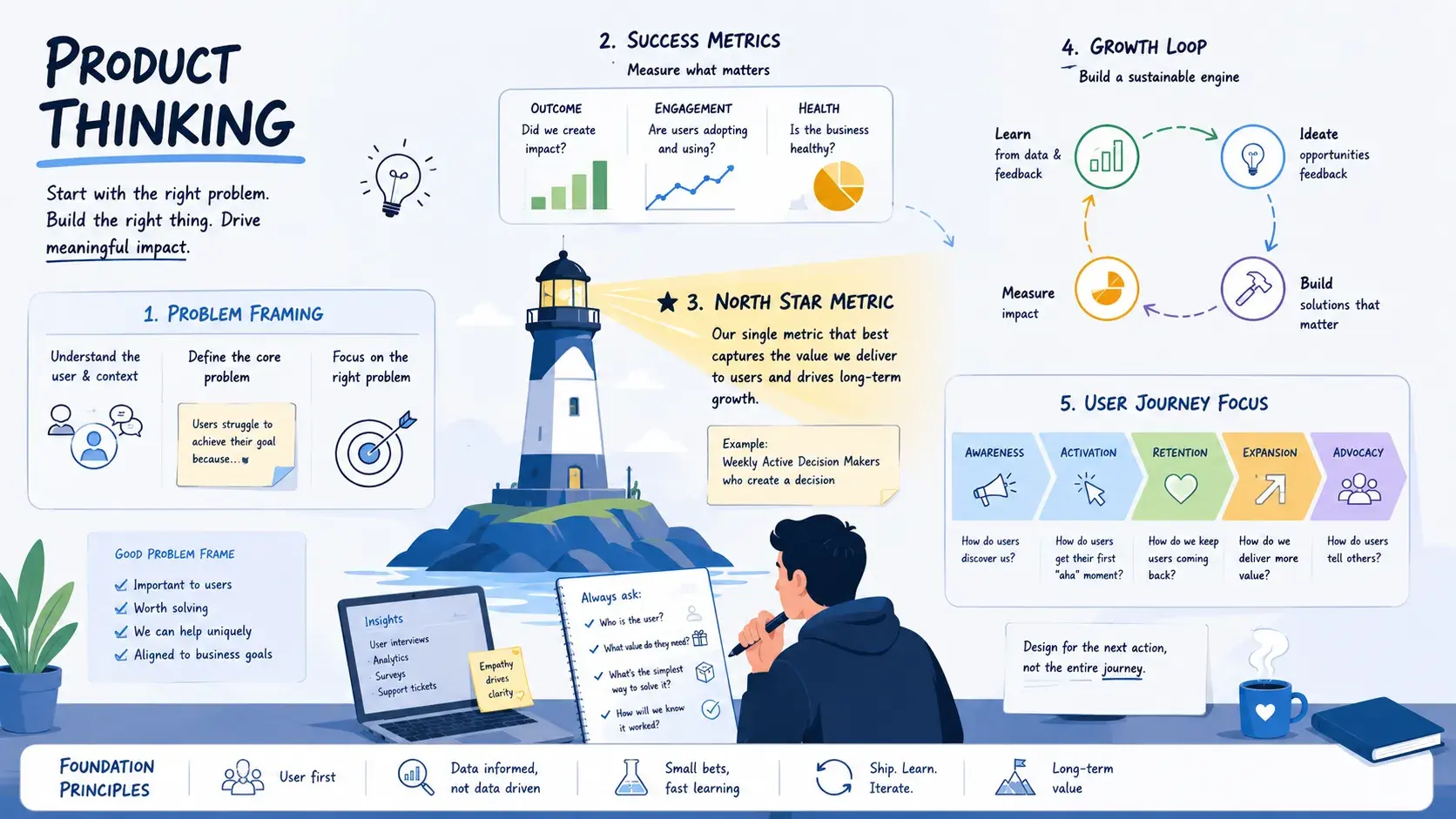
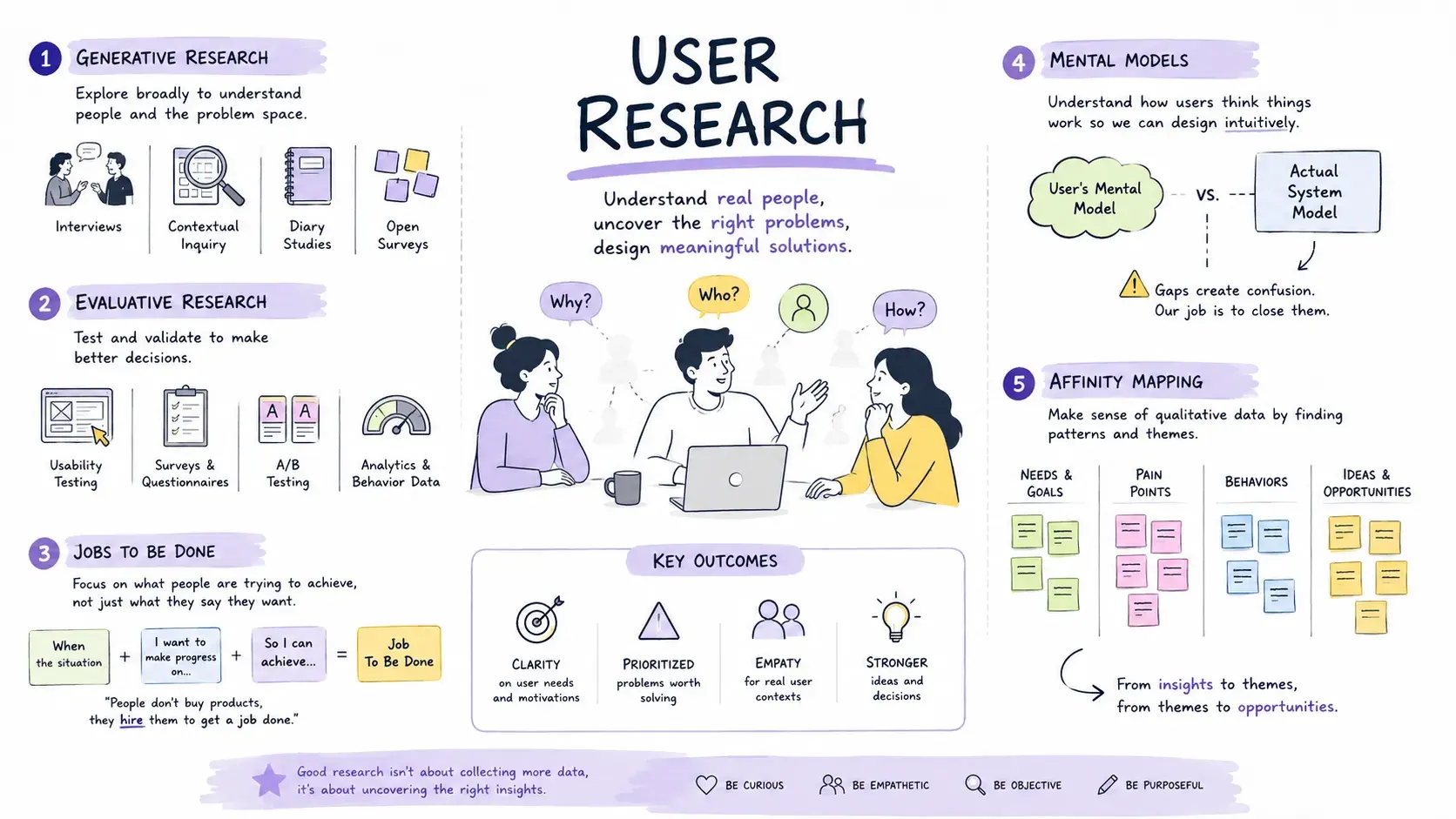
Product Thinking: 5 Concepts Every Product Designer Should Master and User Research Methods That Actually Change Product Decisions are the foundation: the difference between a designer who produces screens and one who changes what gets built, and the research discipline that actually earns that difference instead of just claiming it.
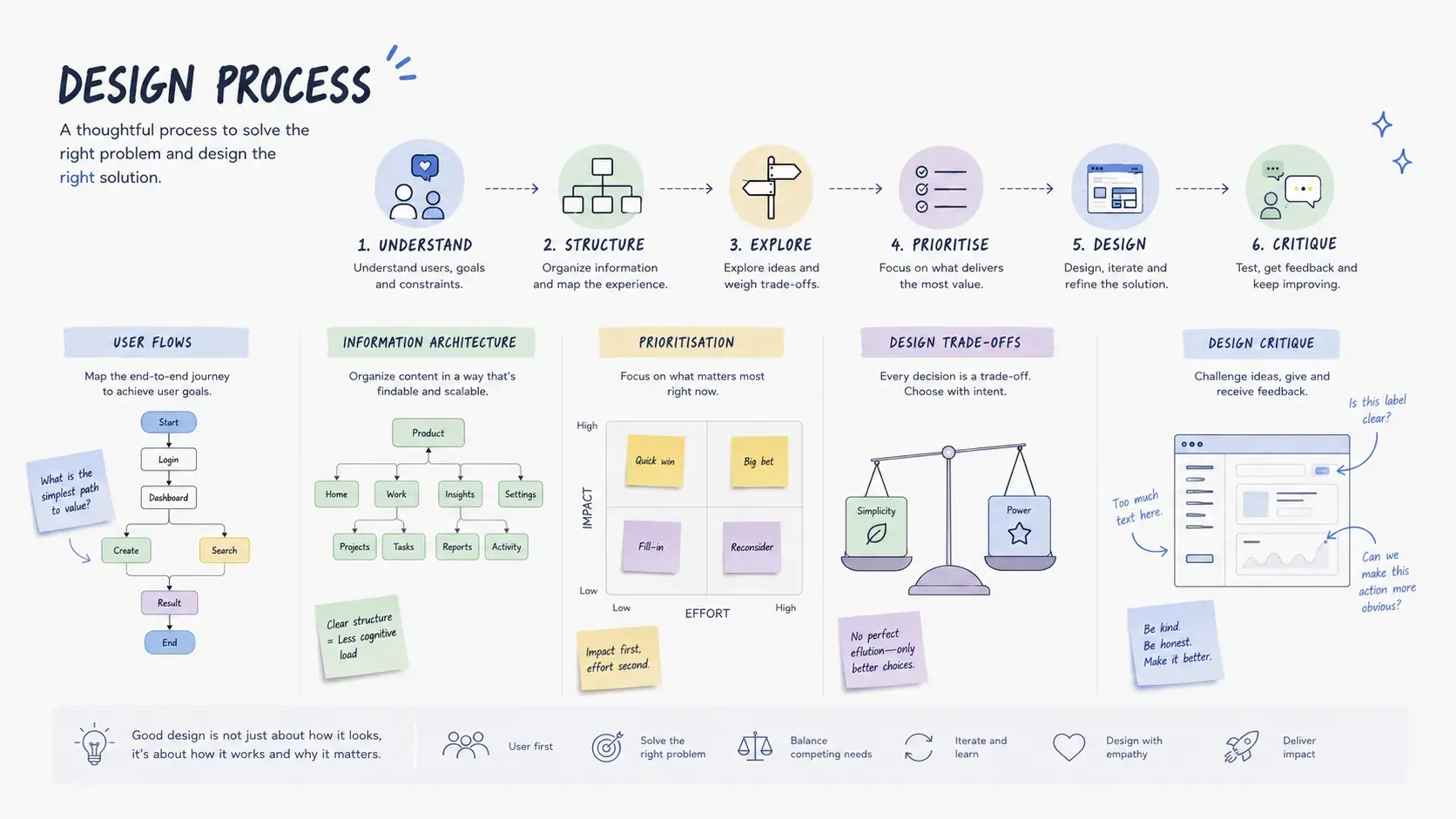
Design Process: 5 Habits That Separate Real Process From Theater is about the gap between a process that looks rigorous in a case study and one that actually holds up under a real deadline. A surprising amount of what passes for "design process" is theater performed for stakeholders, not a working method.
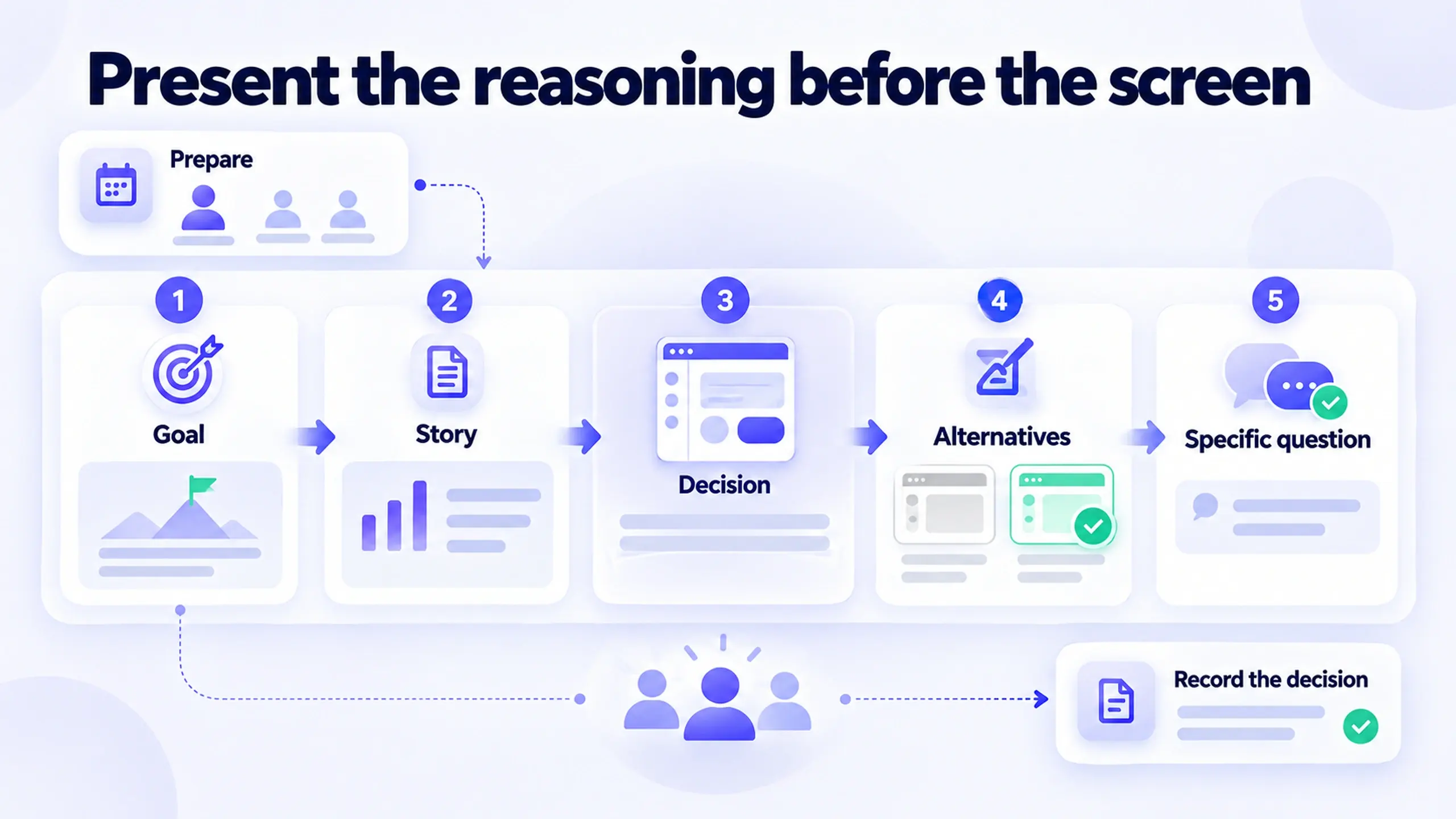
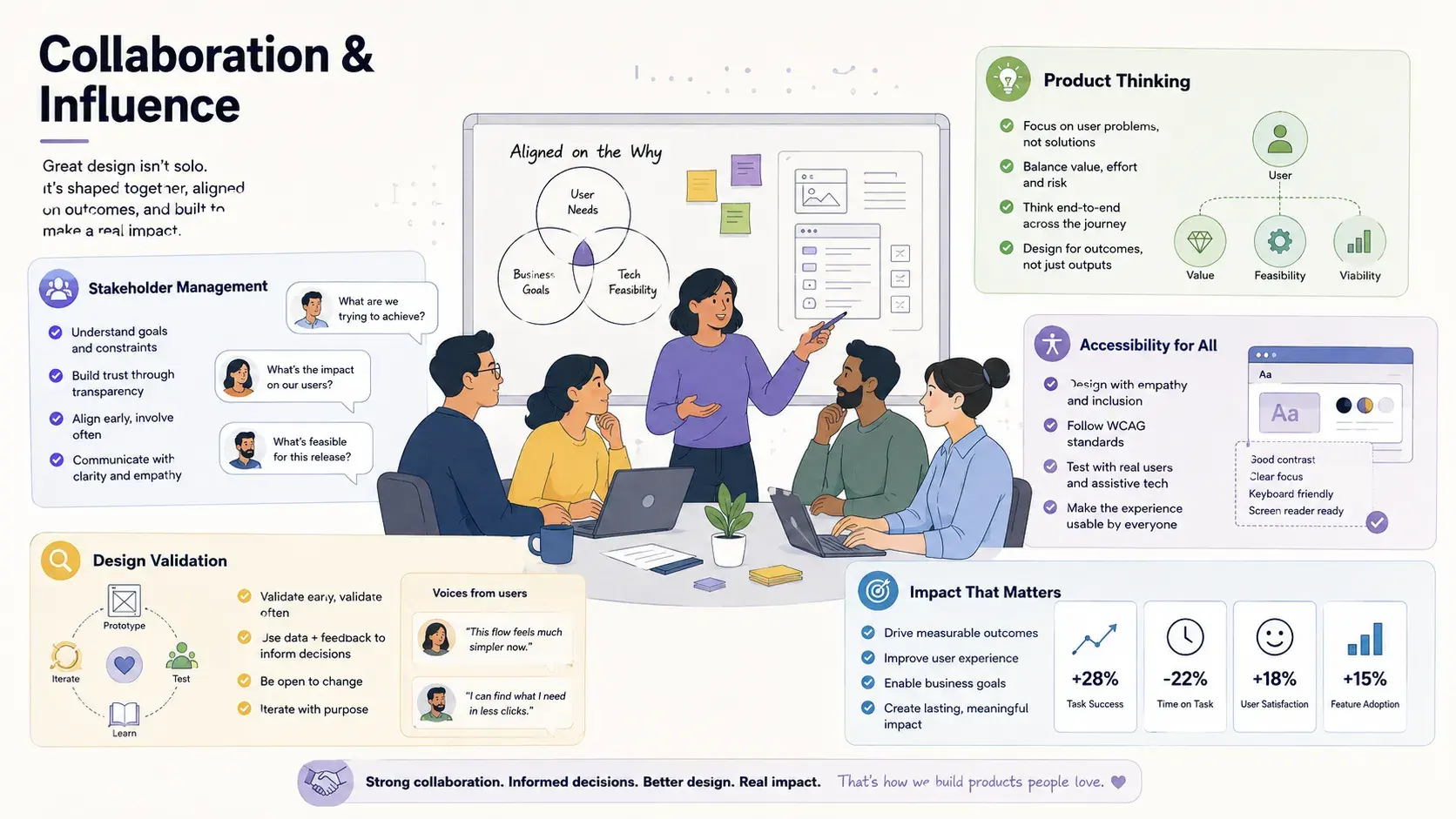
Collaboration and Influence: 5 Skills That Get Design Decisions Shipped covers the part of the job that has nothing to do with craft and everything to do with whether your work actually ships: the skills that get a design decision through a room full of competing priorities instead of dying in a backlog.
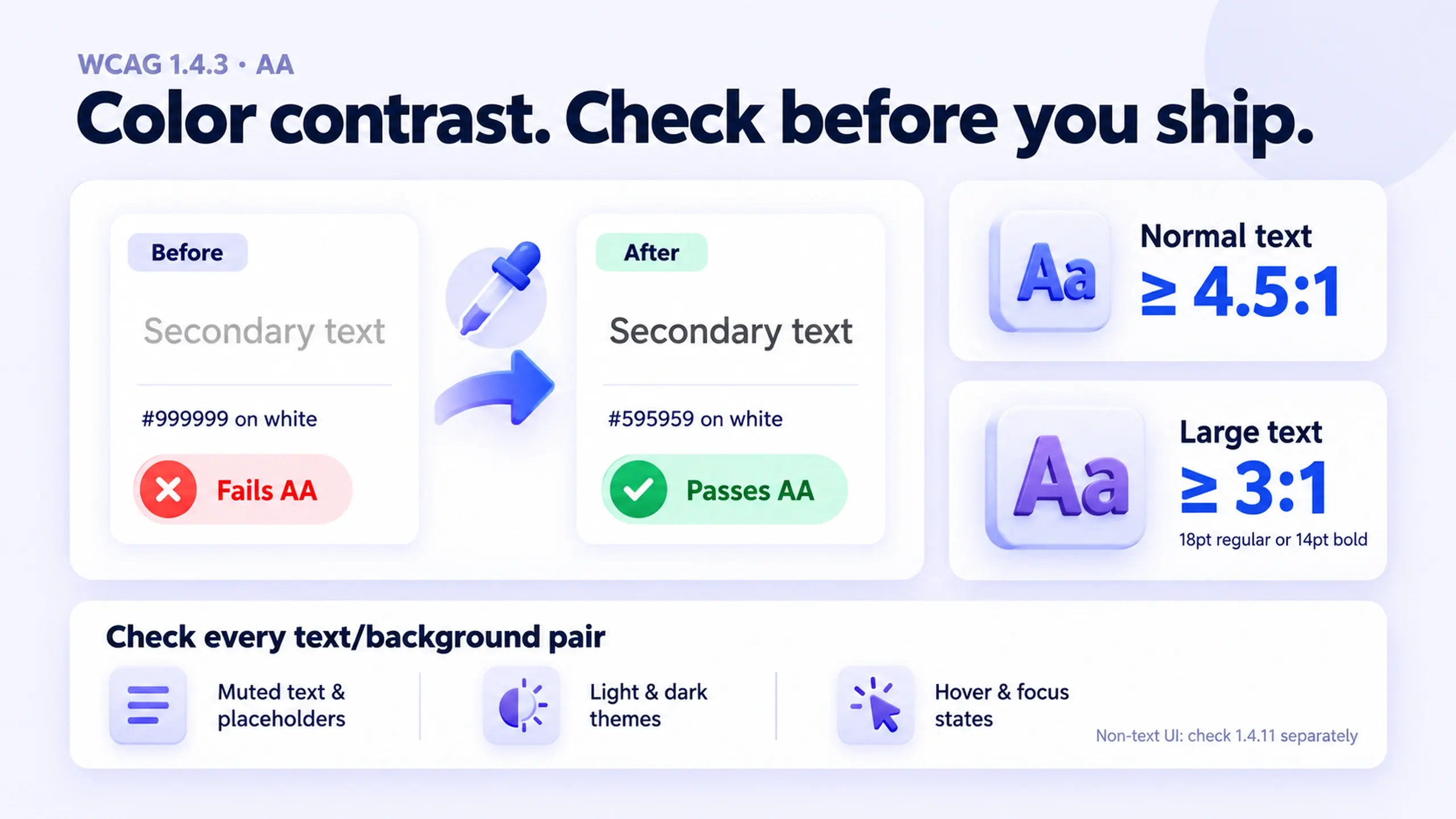
9 Simple UX Fixes That Boost Conversion is the tactical counterpart to the other four: concrete, testable changes that come out of applying this practice to a real product, not abstractions about it.
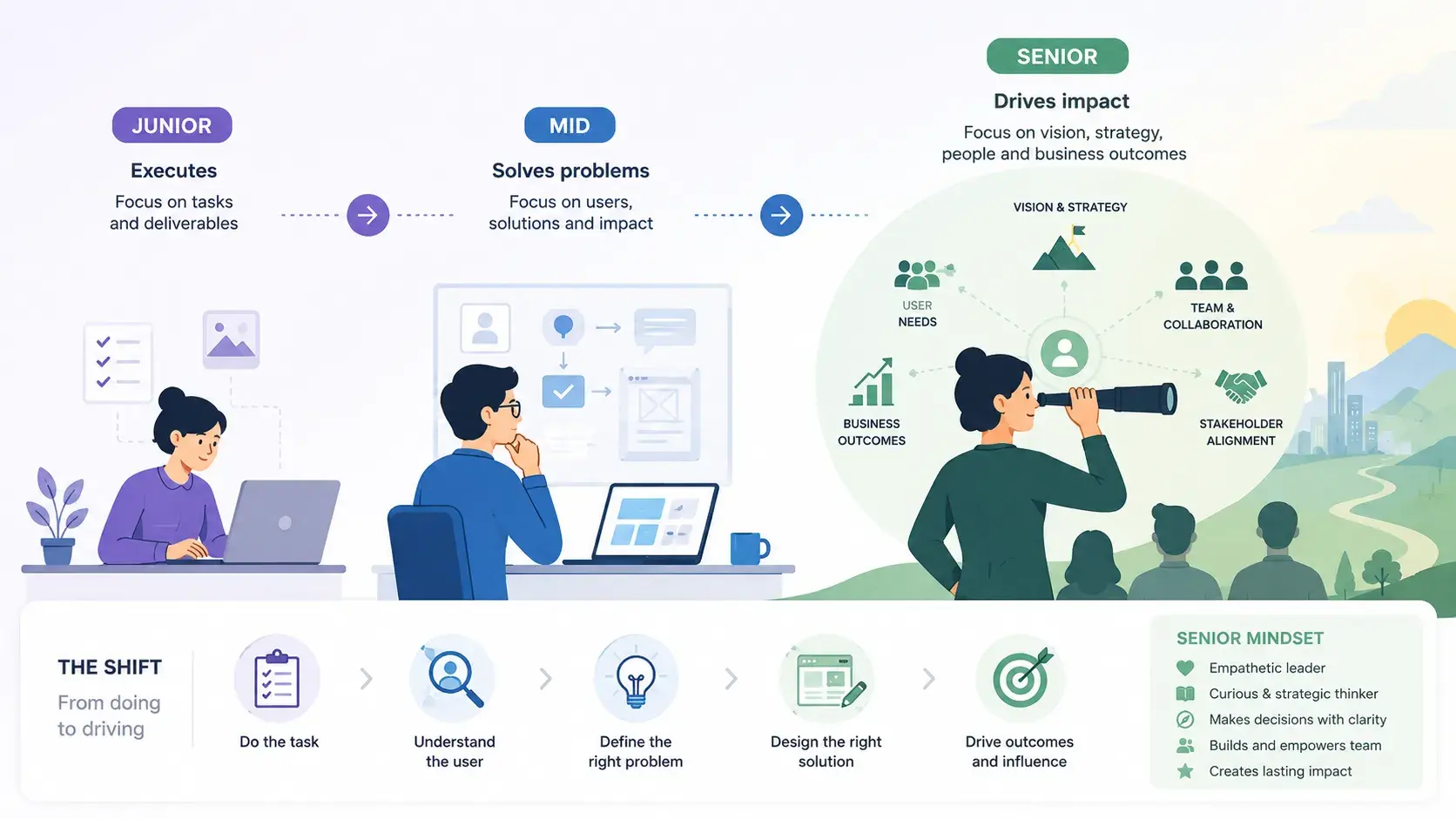
What "Senior" Actually Means in Product Design pulls the thread through all of it: seniority isn't years of experience or a title change, it's the accumulation of exactly this kind of judgment, applied consistently enough that people stop needing to check your work.
The Designer Career Paths Winning (and Losing) the 2026 Job Market takes this same judgment and maps it across several common starting points, graphic design converts, frontend-leaning designers, ex-backend engineers, new entrants, and AI power users, to show what each needs to do to stand out as AI reshapes the craft.
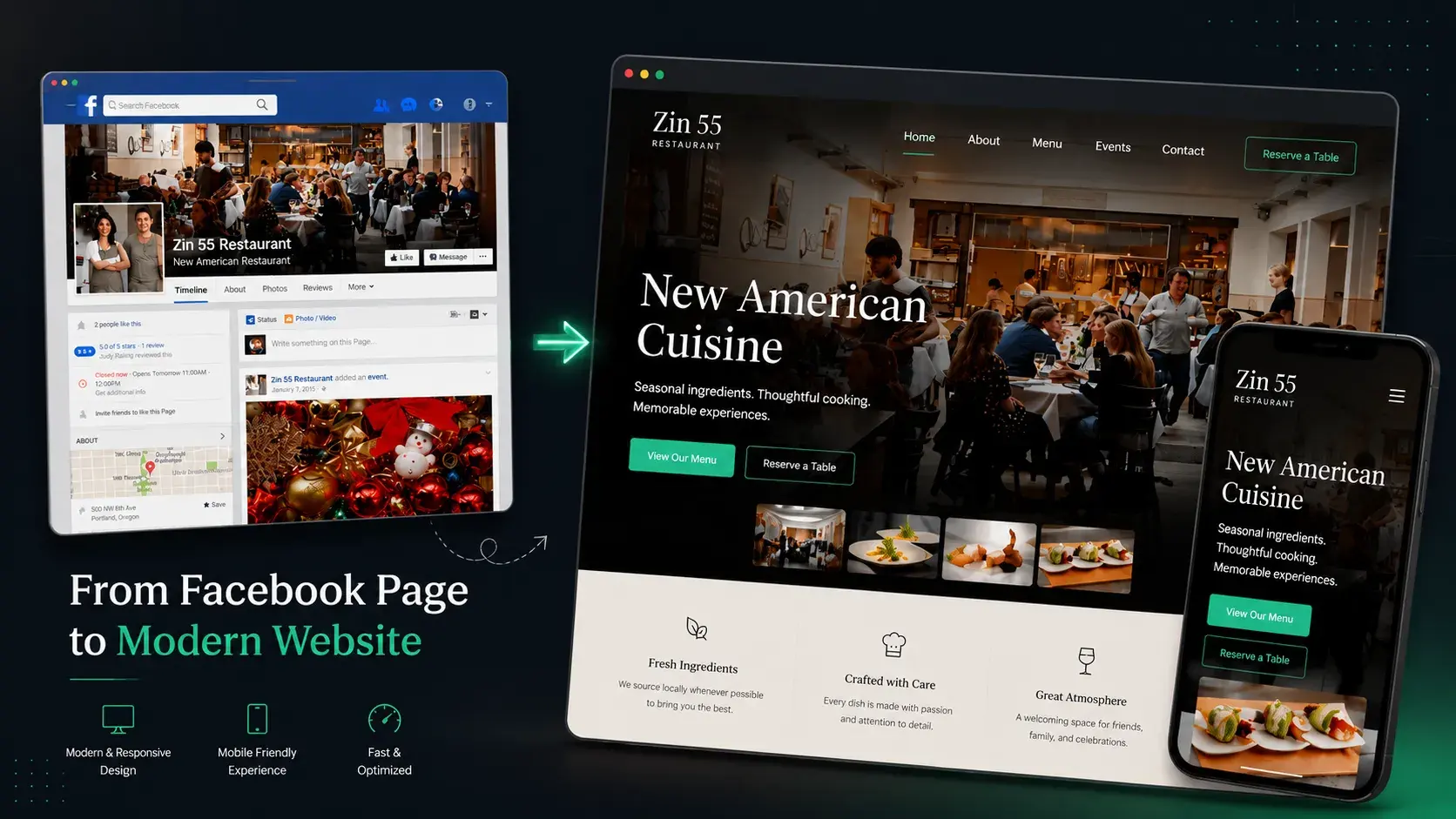
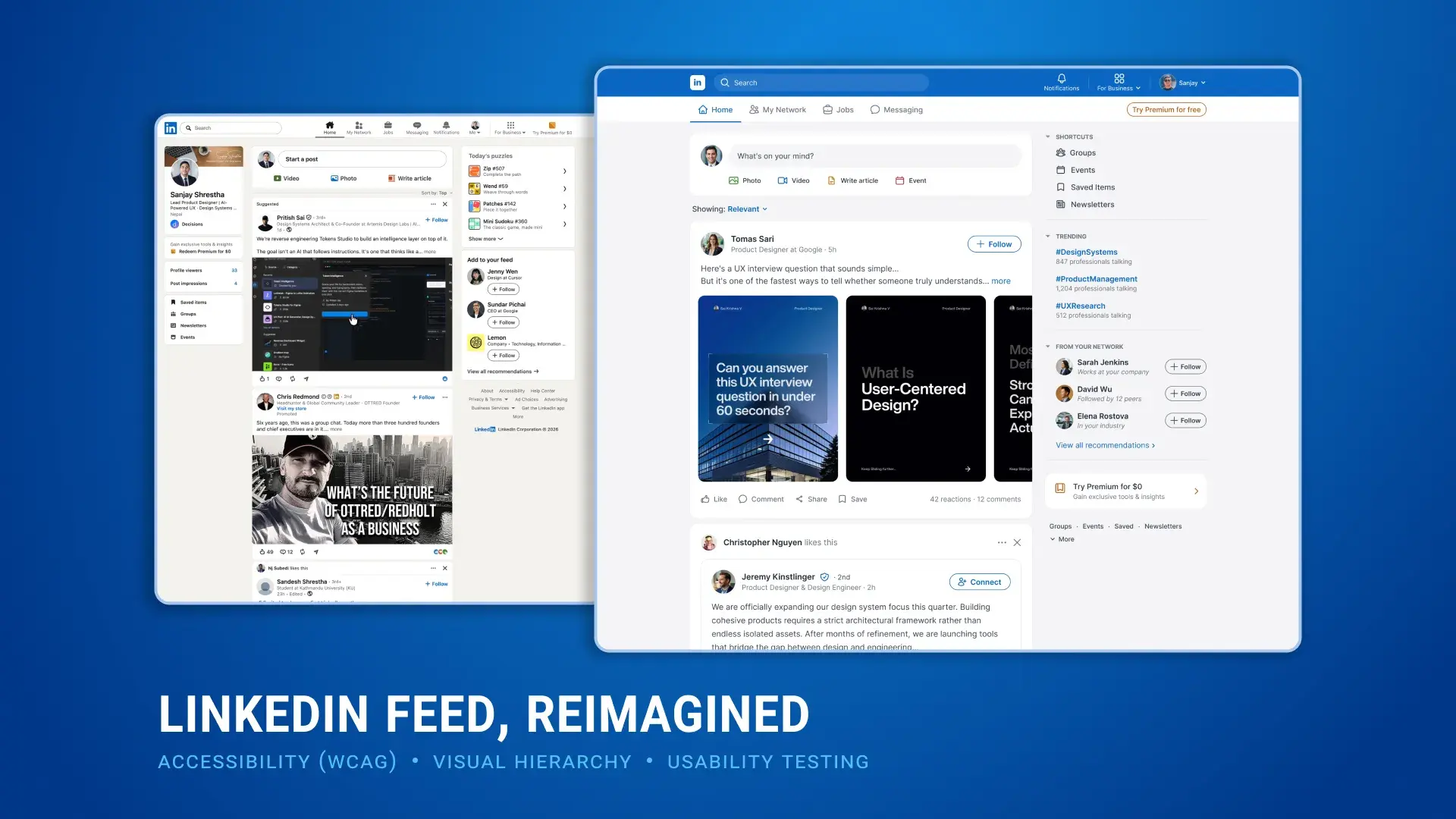
Three case studies show this practice applied to real, sometimes messy constraints. Pagevamp is a research-driven onboarding redesign that moved real signup and drop-off numbers. Streamshare is a self-initiated research process built from five interviews and a competitive audit, not a commissioned brief. LinkedIn Homepage Feed Redesign is a self-initiated usability audit and redesign, validated with real timed tasks against real peers rather than personal opinion alone.
In This Cluster
Articles


Applied